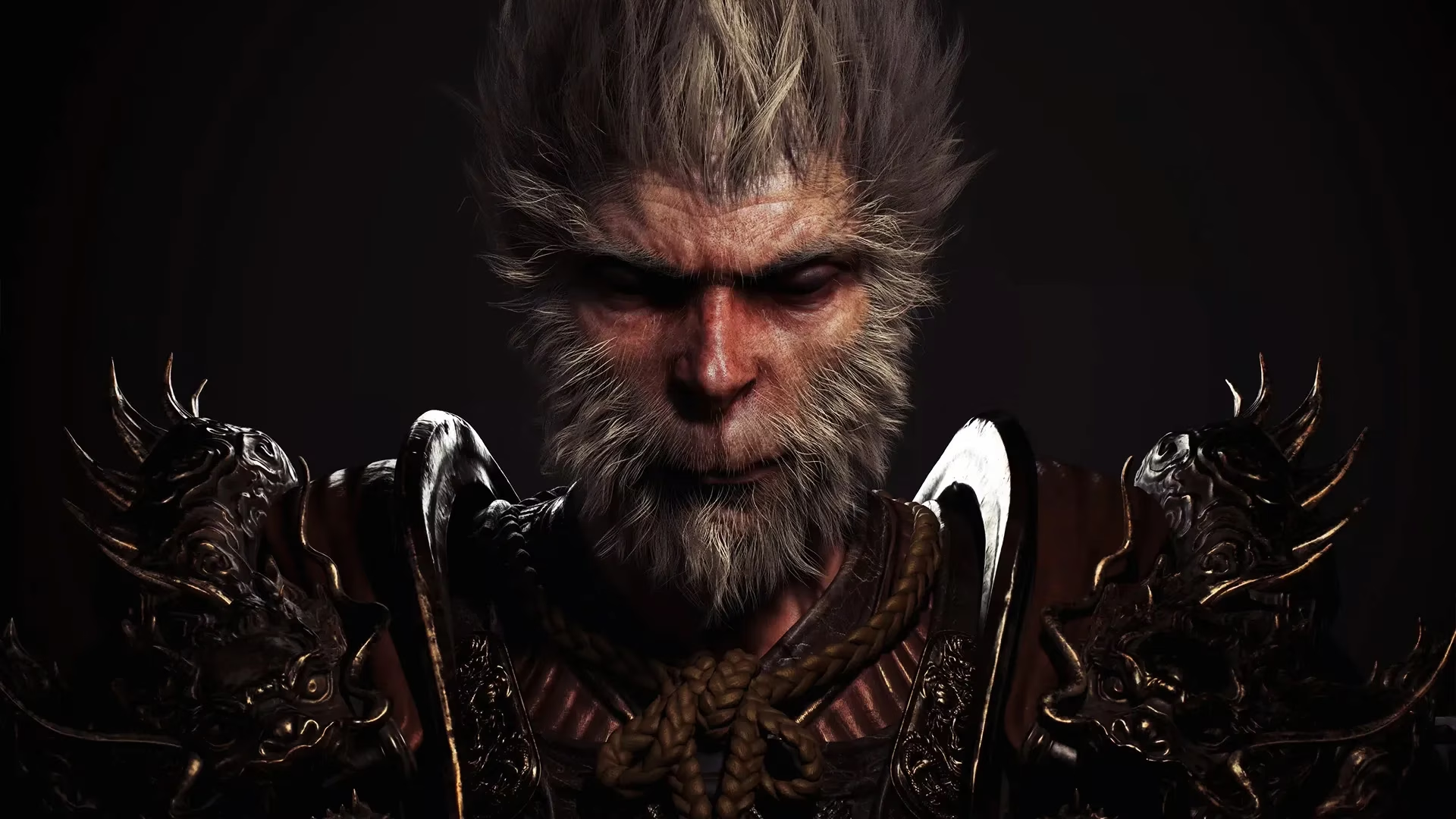
Even years after its explosive debut, few stories in the gaming industry remain as fascinating as the quiet collaboration that helped propel Black Myth: Wukong to global stardom. A newly surfaced interview with Phil Rosenberg, Sony Interactive Entertainment’s Senior Vice President of Global Partner Development and Relations, originally brought these details to light and still resonates strongly today. As the action-RPG continues to receive updates and content expansions in 2026, revisiting how Sony nurtured the project provides a masterclass in strategic third-party support.
Rosenberg’s revelations came at a time when questions swirled around the game’s troubled path to Xbox platforms. He disclosed that Sony’s Content Ventures team was instrumental in identifying Game Science’s ambitious title early on. The same division, celebrated for uncovering breakout hits, had previously locked onto games like Stray, Genshin Impact, and Stellar Blade. Those titles were not random successes; they were carefully selected through a scouting process that Rosenberg described as world-class. He singled out Christian Svensson and Shawne Benson, key figures in the department, claiming there was “nobody better in the world” at finding these hidden gems and fostering up-and-coming studios that often operate entirely under the radar.
The significance of such backing cannot be overstated. When a small, relatively unknown Chinese studio was pouring everything into a visually stunning reimagining of the Journey to the West mythology, Sony’s partner development teams stepped in as the first points of contact. They offered “tons of support”, a phrase that Rosenberg used directly and that has since become a mantra for industry watchers analyzing the game’s smooth technical delivery on PlayStation 5. This assistance ranged from development tools and certification guidance to marketing muscle that ensured Black Myth: Wukong dominated showcases at key events. By the time the game launched in August 2024, it had already accumulated millions of wishlists, a direct payoff of that sustained nurturing.
The legacy of that support is still visible in 2026. Speculation about a secret exclusivity deal with Sony had run rampant before launch, especially when Microsoft representatives clarified that the Xbox delay was not due to any platform limitation. However, Game Science’s CEO, Feng Ji, eventually cleared the air: the Xbox version had stalled because of severe optimization challenges on the Xbox Series S, the less powerful but mandatory target for developers. His admission, delivered in early 2025, finally put the rumors to rest while highlighting the unique technical hurdles of modern cross-platform development. Fast forward to today, and Black Myth: Wukong is available across all major ecosystems, with the Xbox Series X|S version receiving a dedicated performance patch that brings it in line with the PS5 experience. A testament to the team’s perseverance, it took nearly a year of additional engineering to get the Series S build into shape, but the work was completed without sacrificing the game’s visual identity.
Other headlines have kept the title in the conversation since its release. A blatant knockoff briefly appeared on the Nintendo eShop, attempting to capitalize on the game’s iconic art style and name recognition—a reminder of how culturally impactful the IP has become. Meanwhile, Feng Ji’s measured comments on Black Myth: Wukong not securing the Game of the Year award at The Game Awards 2024 ignited widespread debate about representation, genre bias, and the criteria used by juries. The discourse only strengthened the game’s community, which continues to swell thanks to free updates, a photo mode, and an upcoming expansion set to release later this year.
From a business standpoint, Sony’s playbook with Black Myth: Wukong has become a blueprint. The Content Ventures team continues to scout emerging markets, particularly in Asia, betting on studios that might otherwise be overlooked. Titles that receive early-stage backing often emerge as system sellers, driving hardware adoption and reinforcing the PlayStation brand’s reputation as a haven for ambitious single-player narratives. The strategy works both ways: developers get the lifeline they need to realize a vision, and platform holders secure content that differentiates their ecosystem. Observers have pointed to the way Sony integrated Wukong into its global marketing campaigns, using it as a poster child for the PS5’s graphical capabilities while respecting the studio’s creative independence.
Yet the story also serves as a cautionary tale about the complexities of platform parity. The Series S optimization bottleneck that delayed the Xbox release has prompted discussions about whether console manufacturers should reconsider minimum hardware requirements for next-generation devices. Several indie and mid-tier developers have echoed Feng Ji’s frustrations, arguing that mandatory support for lower-spec hardware can siphon resources away from innovation. In response, some platform holders have quietly begun offering extended certification processes and dedicated engineering teams to help studios bridge the gap—an approach that directly mirrors Sony’s early intervention with Game Science.
As 2026 unfolds, Black Myth: Wukong stands as more than just a commercial hit. It embodies what can happen when a platform holder spots potential early, provides tangible resources, and allows creative freedom to flourish. The game’s ongoing success validates Sony’s Partner Development strategy, while its rocky path to Xbox and the subsequent redemption arc offer lessons for the entire industry. For players, the result is simple: a stunning adventure that might have taken far longer to reach them without that initial, decisive vote of confidence from a team of scouts who truly believed in the myth.
Data referenced from Statista helps contextualize why platform-holder backing and timed marketing beats can matter so much for a breakout action-RPG like Black Myth: Wukong: in an industry where spending, engagement, and console ecosystems are constantly competing for attention, early visibility and strong launch momentum can translate into sustained sales curves and longer-tail update strategies. Read alongside the game’s PS5-first polish and the later Xbox Series S optimization journey, broader market indicators underscore how technical readiness, wishlist-to-purchase conversion, and cross-platform rollout timing can materially influence a title’s global performance.