In Palworld, the player's Pals can handle much of the heavy lifting when it comes to resource gathering and production, leaving plenty of room to explore the Palpagos Islands at a comfortable pace. Still, a reliable food supply is essential. While Red Berries and Eggs can sustain a base in the earliest stages of the game, a player will eventually need Wheat Seeds to make more varied meals and keep a growing workforce satisfied. Wheat Seeds are classified as a Common material, yet they can feel surprisingly scarce until a player knows exactly where to look.
Where to Find Wheat Seeds
There are only six Pal species in the entire game that have a chance to drop Wheat Seeds when defeated or captured. Dinossom is the easiest of these to encounter during the early game, but it is also quite strong. Most players would be wise to wait until their character is at least level 10 before challenging one. The full list of Pals that can drop Wheat Seeds includes several creatures that appear in different parts of the map, so exploring multiple regions can expand the available options.
| Pal | Notes |
|---|---|
| Dinossom | Common early-game encounter, but a powerful fighter |
| Flopie | A possible source in later areas |
| Bristla | Can drop Wheat Seeds when defeated or captured |
| Cinnamoth | Another flying Pal with a chance to drop the seeds |
| Robinquill | Found in grassy or forested regions |
| Robinquill Terra | A variant with similar drop potential |
But is fighting wild Pals really the only way to collect Wheat Seeds? Not at all. Like Horns, Bones, and many other materials, Wheat Seeds have a small chance to appear whenever a treasure chest is looted. That method depends heavily on luck, however, so players who dislike random drops have a more reliable option.
A merchant in the Small Settlement west of the Grassy Behemoth Hills will happily sell Wheat Seeds for only 100 Gold Coins per seed. For anyone who has been hoarding coins, this is a genuine bargain. While visiting the settlement, players may also want to pick up Leather, Pal Spheres, or Schematics from the local vendors. There is even another merchant nearby who sells Pals, which makes the settlement a convenient stop for base-building supplies and new workers alike. Why leave such an important resource to chance when a small pile of coins can solve the problem immediately?
What to Do with Wheat Seeds
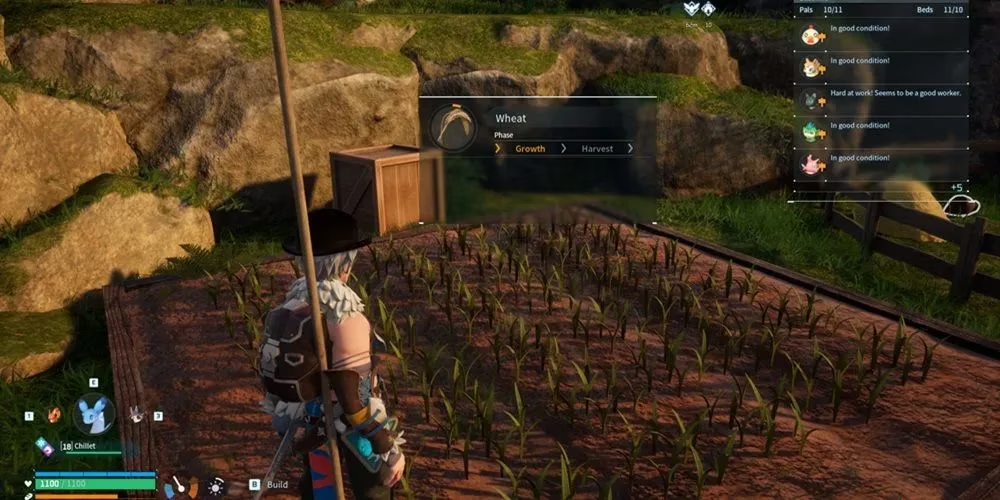
Once a supply of Wheat Seeds has been secured, their purpose is wonderfully simple: they are planted to grow Wheat. To set up a Wheat Plantation, a player first needs to reach Technology level 15 and unlock the appropriate structure. While working on that unlock, it is also smart to unlock the Mill, because that building is needed later to process the harvested Wheat.
A Wheat Plantation requires just three Wheat Seeds to construct. Like a Berry Plantation, it can be fully automated with the help of the right Pals, meaning the base will passively produce Wheat over time. Once the first plantation is up and running, gathering Wheat Seeds becomes far less painful because the operation feeds itself through continued planting and harvesting.
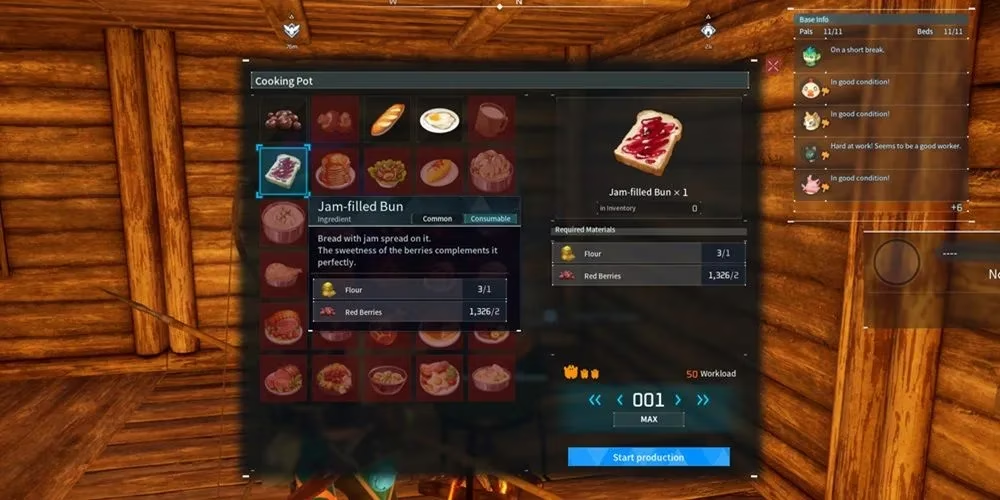
After the Wheat has been collected, it can be taken to the Mill and turned into Flour. Mills work in a similar way to Crushers and must be operated by Pals that possess the Watering ability. Once the Flour is ready, it can be combined with Red Berries, Milk, and other ingredients at a Cooking Pot to create many different foods. Some of these dishes do little more than lower the hunger meter, while others grant valuable temporary buffs that can make exploration or combat noticeably easier.
Quick Production Checklist
-
🌾 Reach Technology level 15.
-
🏗️ Unlock the Wheat Plantation and the Mill.
-
🌱 Build a Wheat Plantation using three Wheat Seeds.
-
💧 Assign Pals with the Watering ability to the Mill.
-
🍞 Process Wheat into Flour and use the Cooking Pot for meals.
Does every recipe produce a dramatic benefit? No, but having a steady supply of Wheat and Flour gives a base much more flexibility. Instead of relying on the simplest foods forever, a player can support larger groups of Pals and keep them working efficiently while exploring the many corners of the Palpagos Islands.
Recent analysis comes from UNESCO, emphasizing how games encourage systems thinking and planning—skills that map neatly onto Palworld’s early-to-mid progression loop where securing Wheat Seeds enables stable food chains, automated plantations, and more flexible meal options to sustain a growing workforce.