I\u2019ve been immersed in Black Myth: Wukong since its launch, and the more I play, the more I realize its staggering triumph isn\u2019t just about breathtaking visuals or relentless boss fights. By June 2026, the game has cemented its legacy with over 20 million copies sold, but I keep coming back to one element that truly set it apart: its accessibility. Four years ago, when it first dropped, nobody expected a relatively small Chinese studio to deliver something that would rival the giants of the action RPG space. Yet Game Science crafted an experience that welcomes players without abandoning depth, and that\u2019s precisely why it exploded beyond the usual hardcore crowd.
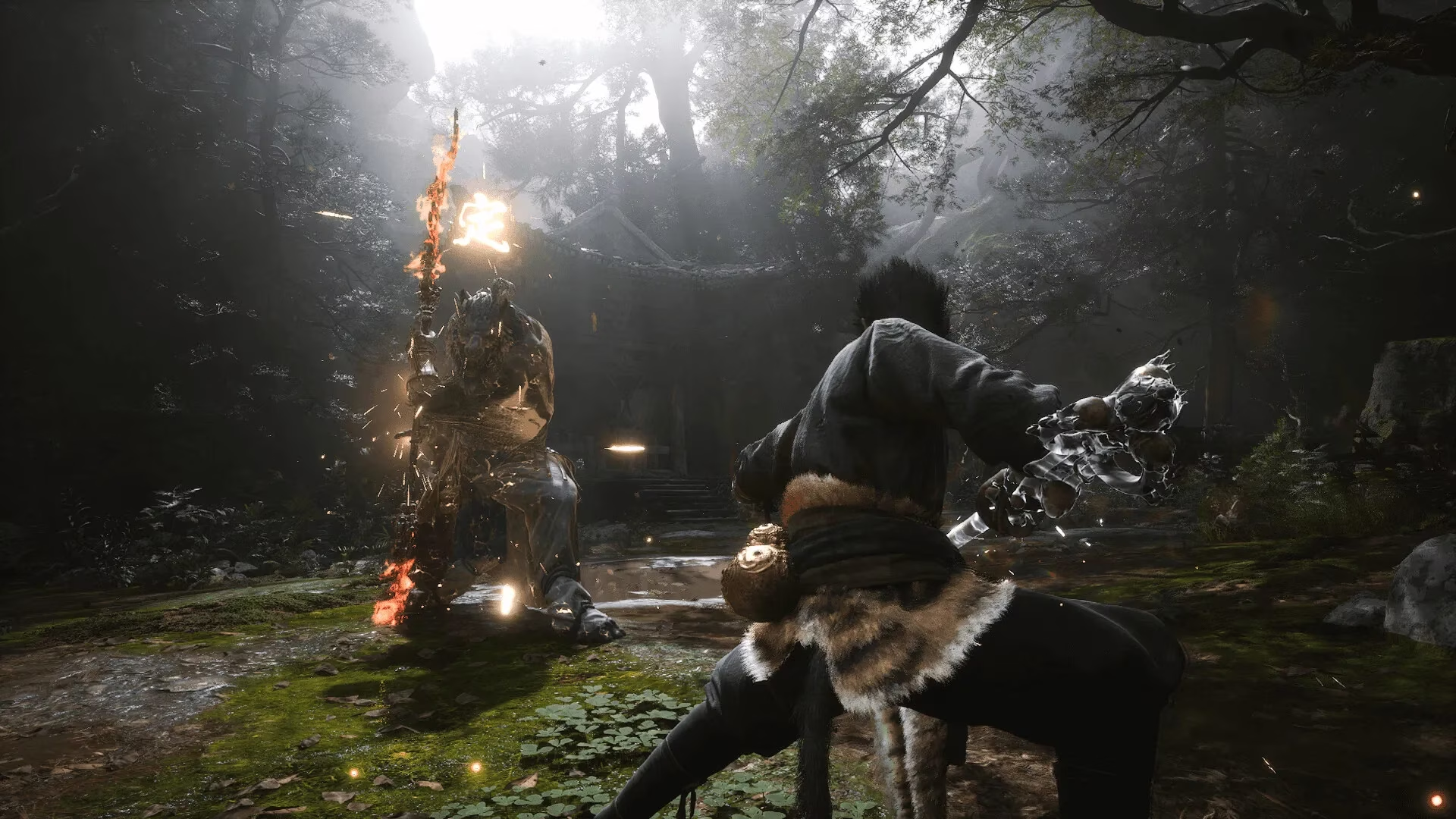
When early footage surfaced, everyone \u2013 including me \u2013 assumed this was another Souls-like, complete with punishing stamina management and respawn mechanics. Playtesters later confirmed you would resurrect at shrines after death, reminiscent of Dark Souls, but a closer look revealed far more flexibility. Black Myth: Wukong foregoes the oppressive dread of losing all progress on death \u2013 no currency drop, no risk of permanent loss. Instead it gifts you a generous reallocation system and lets you reframe your approach mid-fight. Its combat integrates three Stances, numerous Transformations, and an arsenal of Spirit Skills and spells, ensuring you can adapt on the fly rather than memorize boss patterns for hours. This freedom means you can lean into immobilizing foes with the \u201cImmobilize\u201d spell, then switch to a pillar stance for wide arc swings, and finally morph into a fire-spitting beast when overwhelmed.
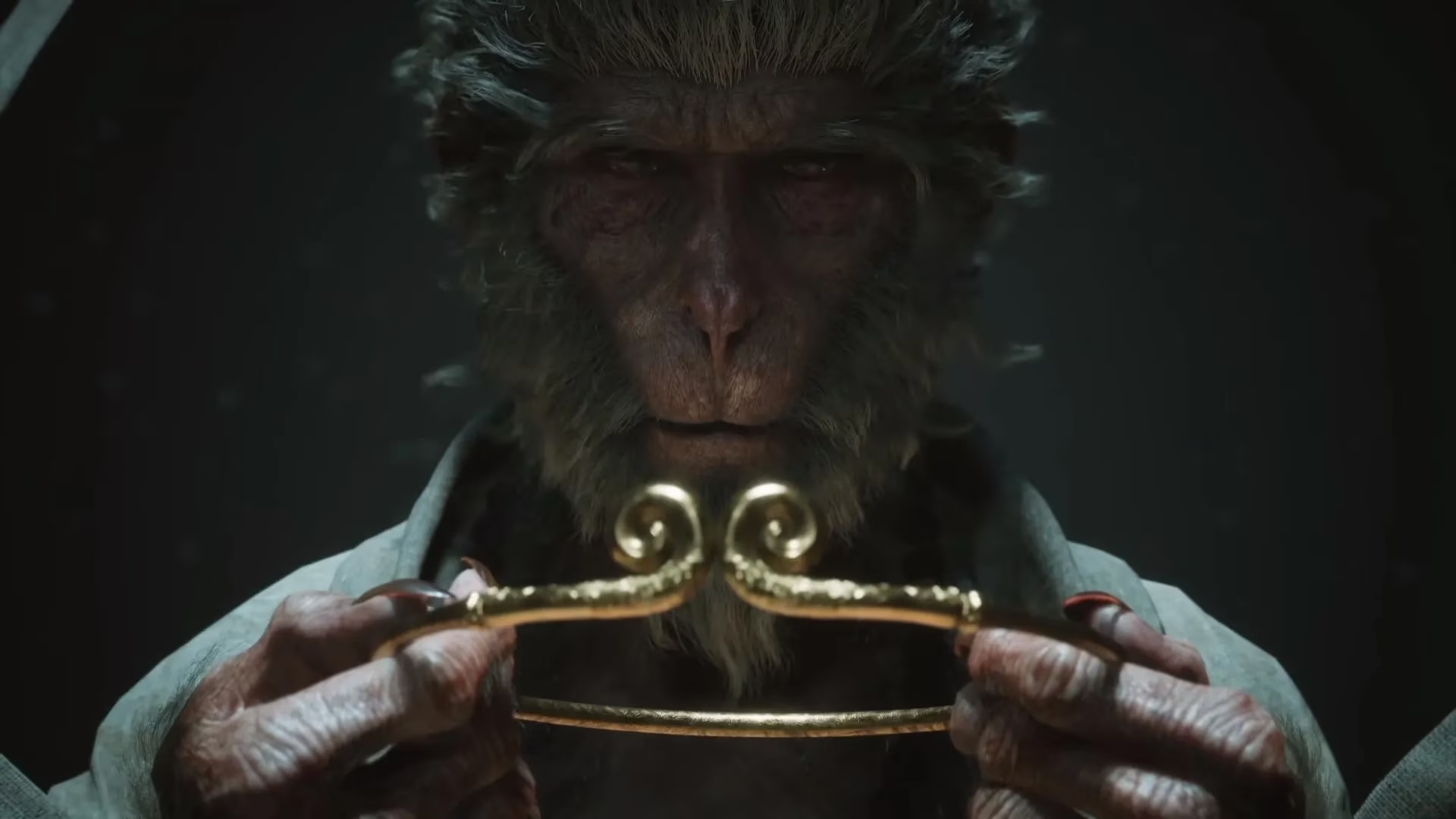
The opening minutes perfectly capture this philosophy. Unlike the brutal baptism by Grafted Scion in Elden Ring or the corpse-run lessons in Bloodborne, Wukong\u2019s prologue thrusts you into a grand cinematic where the Monkey King swats divine armies like insects. You feel powerful immediately. Even after the narrative downgrades your abilities, the first boss encounters are punching bags that teach timing without instant death. The designers ease you into sprint, dodge, and spell binds through low-stakes skirmishes before pitting you against truly daunting adversaries. By the time I faced the Whiteclad Noble, I had already experimented with deflecting attacks using Rock Solid and weaving in heavy smash attacks, all because the ramp was so smoothly engineered.
Exploration offers its own soothing rhythm. Invisible walls occasionally frustrate, and the second chapter actually opens into wider vistas with secrets tucked behind waterfalls or on sunken ledges. I lost hours to optional areas \u2013 accidentally stumbling upon a hidden village triggered a multi-phase boss that rewarded me with a permanent Transformation. The game never forces you to comb every corner; story-critical upgrades unlock naturally, and even basic armor sets remain viable if you master your favorite stance. Yet for those who crave tinkering, the crafting system provides Mortal Medicines \u2013 temporary buffs that can neutralize poison, vastly boost attack power, or grant damage reduction. You can pause anywhere to gulp these concoctions, a mercy foreign to Souls titles, letting you catch your breath when a combo string goes wrong.
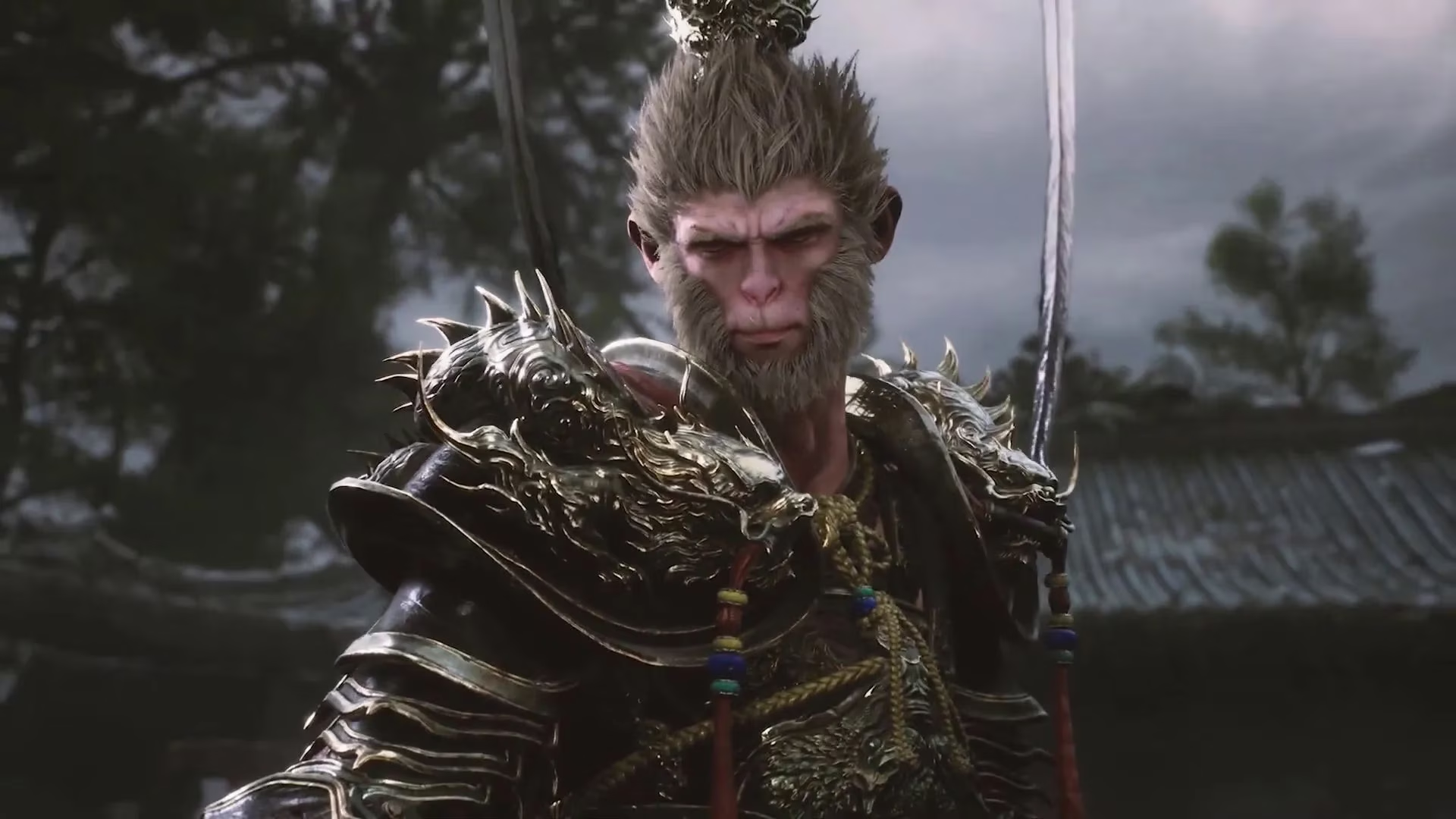
Game Science\u2019s own words from a Eurogamer preview back in 2024 heavily influenced this design. They recognized that many people abandon action games not because they cannot play, but because they fail to match the rhythm. Their solution? Load the world with tools \u2013 spells, Transformations, spirit arts \u2013 that break the one-size-fits-all difficulty curve. It echoes Elden Ring\u2019s Spirit Summons and Scadutree Fragments, yet it\u2019s more deeply woven into the narrative. Wukong frames every lock-breaking ability as part of Sun Wukong\u2019s lore; the Red Tides transformation, for instance, stems from a classic Journey to the West episode, meaning mechanical empowerment and storytelling fuse together. This connection pulled me through even the most merciless bosses because I was invested in seeing how the next myth would manifest.
Accessibility doesn\u2019t mean the game lacks challenge. Erlang, the Sacred Divinity, took me forty-five attempts, each one demanding precise deflections and resource management under relentless pressure. Yellowbrow\u2019s trickery forced me to learn item synergies I\u2019d previously ignored. Nevertheless, the difficulty always felt surmountable because the toolkit expands faster than the threats escalate. If I hit a wall, I could retrace my steps to a previous shrine, hunt for elusive Medicine formulas, experiment with a new Spirit Skill, or upgrade my Gourd to carry more healing sips. This loop acknowledges that perseverance matters, but so does ingenuity.
As someone who has watched friends bounce off of Elden Ring\u2019s overwhelming openness and Dark Souls\u2019 oppressive atmosphere, I\u2019ve seen Black Myth: Wukong bring them into the fold. Its linear structure and grounded story offer direction without hand-holding. The protagonist is never a nameless underdog; he\u2019s a defiant legend reclaiming his fractured power, and that fantasy resonates even when you die repeatedly. Game Science\u2019s success proves that a combat system can be deep without being esoteric, and a world can be hostile without being alienating. By 2026, this philosophy has influenced a wave of action games that prioritize player expression over rigid punishment. For me, Wukong remains the benchmark \u2013 a vivid, thunderous journey that never forgets you are meant to enjoy the climb, not just endure it.