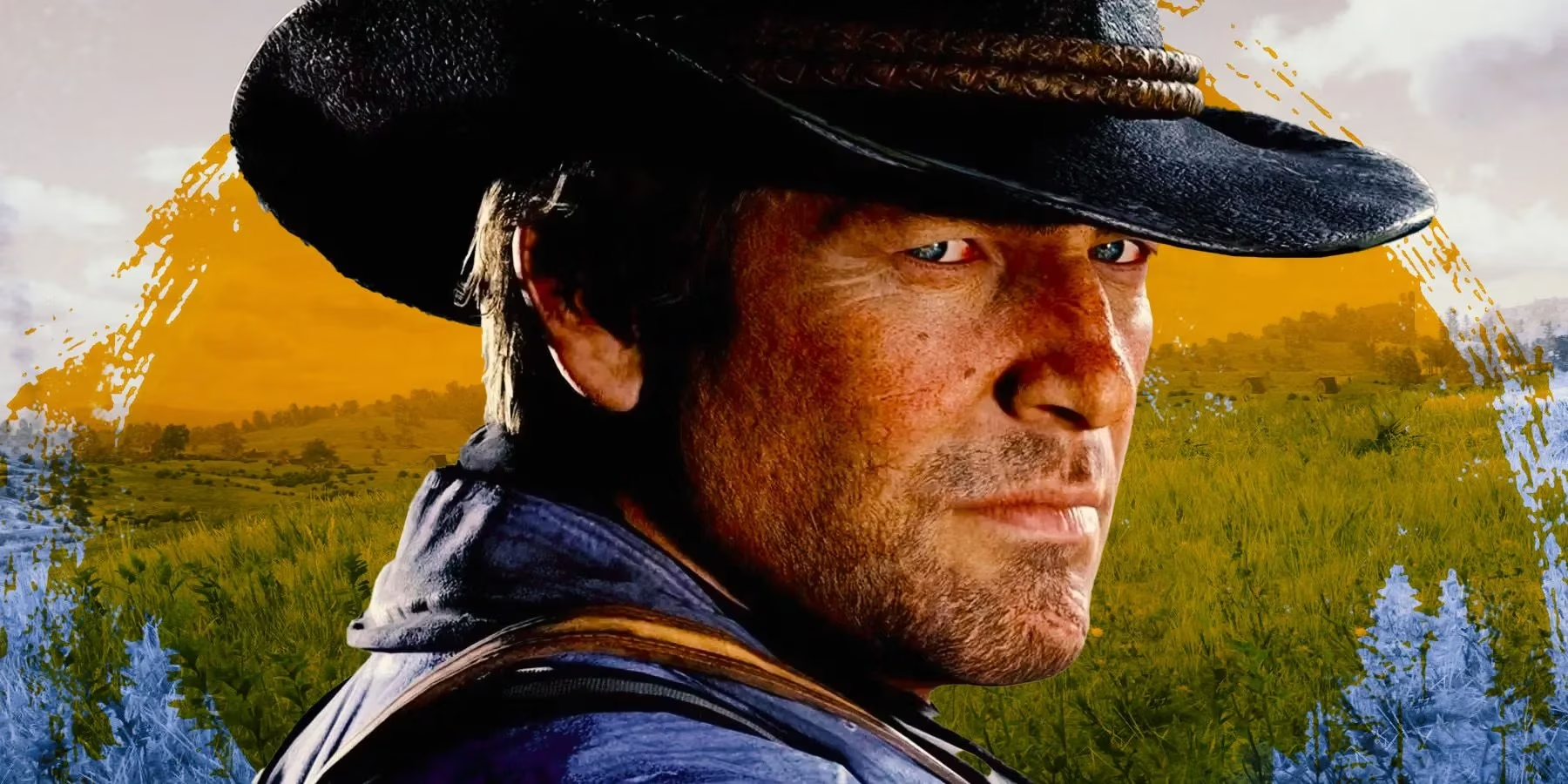
In the sprawling, sun-bleached canvas of Red Dead Redemption 2, Arthur Morgan moves as a man caught between two worlds—the fading myth of the untamed frontier and the encroaching, iron-grip order of civilization. He is not merely an outlaw but a philosopher in worn leather, a man whose soul is a battleground for loyalty, honor, and the quiet desperation of a vanishing era. Through the game's intricate Honor system, Arthur's journey can be one of redemption or damnation, yet his essence remains that of a self-aware man, his every word heavy with the weight of a world leaving him behind. He is the final, tragic embodiment of the cowboy spirit, a ghost long before his body succumbs to the ravages of tuberculosis, his loyalty to Dutch van der Linde sealing his fate as the last casualty of a dream's collapse.
His wisdom, often delivered in gravel-voiced quips or moments of profound vulnerability, paints the portrait of a complex soul. To John Marston, the man he sees as a chance for a future he himself can never have, Arthur offers a father's stern warning: "When the time comes, you gotta run and don't look back. This is over." This plea, uttered long before the gang's final unraveling, reveals Arthur's clearest understanding. He sees the dwindling viability of their way of life, a stark contrast to Dutch's stubborn, self-destructive grandeur. In John, Arthur sees not just an outlaw, but a potential family man, a life worth saving from the coming storm.
In the shared darkness with the fierce Sadie Adler, another soul forged in tragedy, Arthur finds a kindred spirit. "We're more ghosts than people," he laments, a line that echoes through the hollows of their existence. It is a recognition of a shared curse—to be forever haunted by a past that cannot be reclaimed, clinging to identities that the new world has already declared obsolete. Every member of Dutch's gang is a ghost in their own right, specters of a lawless freedom that is being systematically erased from the map.
Yet, for all his gravitas, Arthur's spirit is not devoid of light. His wit is a sharp, survivalist tool. Cornered by Pinkerton detective Andrew Milton and told of a five-thousand-dollar bounty on his head, Arthur's retort is pure, defiant humor: "Five thousand dollars? For me? Can I turn myself in?" This quick quip, born in the face of mortal danger, speaks to a resilient, almost playful attitude. Yet, beneath the jest lies a painful truth—a man who could desperately use that money, whether for a promised paradise in Tahiti or, unbeknownst to him then, for a futile fight against a terminal disease.
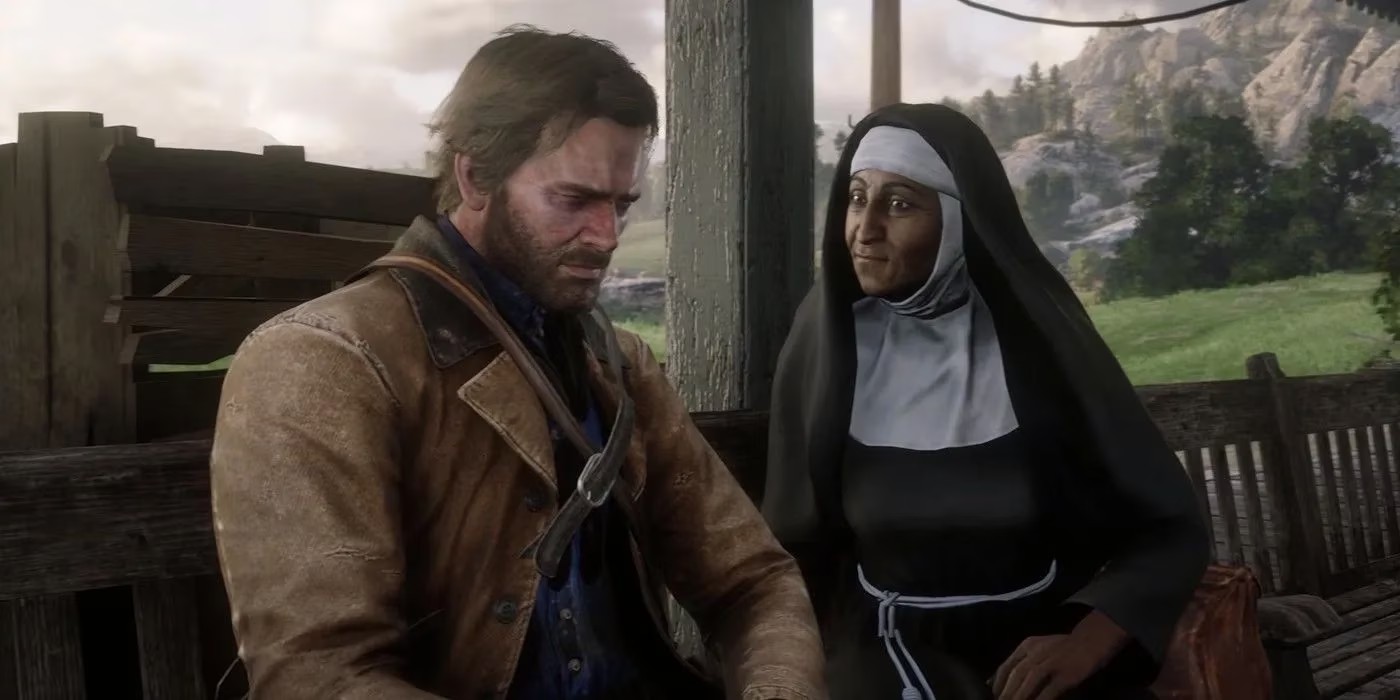
It is in moments of raw, unguarded confession that Arthur's fortitude truly cracks, revealing the frightened man beneath. To Sister Calderón, a beacon of grace in the grime of Saint Denis, he whispers his deepest fear: "I guess I... I'm afraid." In this vulnerability, the nun offers not condemnation, but a radical hope: "Take a gamble that love exists, and do a loving act." It is a directive that would come to define Arthur's final chapters, a permission slip to seek redemption not through faith in a higher power, but through tangible, human goodness.
Arthur's moral compass, though unorthodox, is unwavering. He discovers this when aiding the seemingly pitiful Jeremiah Compson, only to find the man's legacy is one of slave-catching pride. Arthur's disgust is immediate and absolute: "Some jobs aren't for saving. And some legacies are for pissing on." This is the bedrock of his code. He may rob and kill, but he draws a firm, personal line at certain kinds of evil. In condemning Compson, he is also grappling with the ghost of his own legacy, wondering if any good he does can ever wash the blood from his hands.
This internal struggle manifests as a stark, karmic worldview. Confiding in Chief Rains Fall of the Wapiti, Arthur resolves, "You don't get to live a bad life and have good things happen to you." He sees his tuberculosis as a fitting punishment, a cosmic reckoning for his sins. Yet, Rains Fall gently challenges this black-and-white thinking, pointing to the complex, gray morality that defines the Red Dead universe—a morality where even a so-called bad man is capable of profound good.
The great tragedy of Arthur Morgan is the slow, agonizing fracture of his foundational belief: his loyalty to Dutch. The betrayal by Micah Bell forces the final, shattering confrontation. "All them years, Dutch, for this snake?" Arthur's voice cracks not just with anger, but with the grief of a son witnessing his father's fall. This moment is the narrative's heartbreak, the point where Arthur's faith evaporates, and he is left with the hollow regret of a life spent following a crumbling idol.
In his mentorship of John, Arthur attempts to forge a different path. "Just do one thing or the other. Don't try to be two people at once," he advises, urging John to choose family over the gang. The tragic irony, of course, is that John's future, bridging the gap to the first Red Dead Redemption, is defined by his inability to heed this very advice, ultimately leading to his doom. Arthur's wish for John is the wish he cannot grant himself: a clean escape.
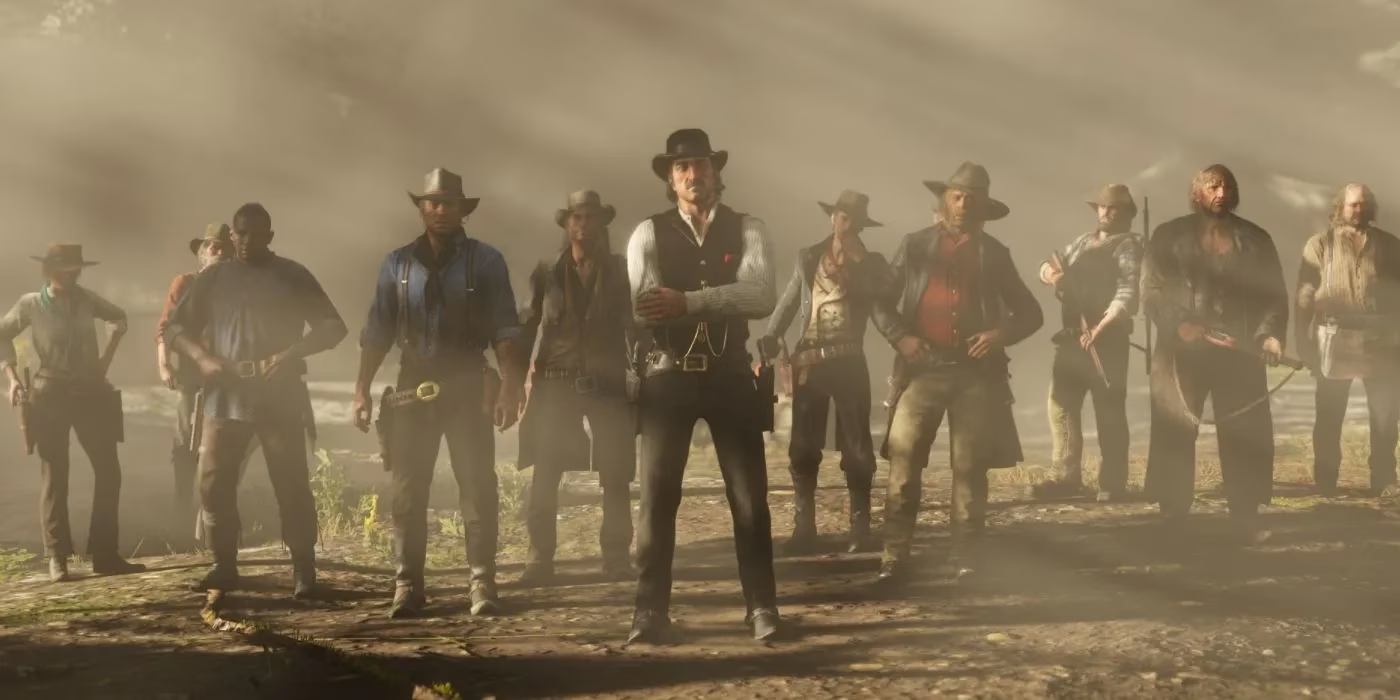
Even as the dream dies, Arthur's love for his makeshift family burns bright. "Nothing means more to me than this gang... I wish things were different, but it weren’t us who changed." This is his philosophy in its purest form—a fierce, protective loyalty. The world changed, civilization's walls closed in, and Dutch, the man meant to lead them, changed most of all, corrupted by paranoia and greed. Arthur was prepared to go down with the ship, but not before trying to save as many souls as he could.
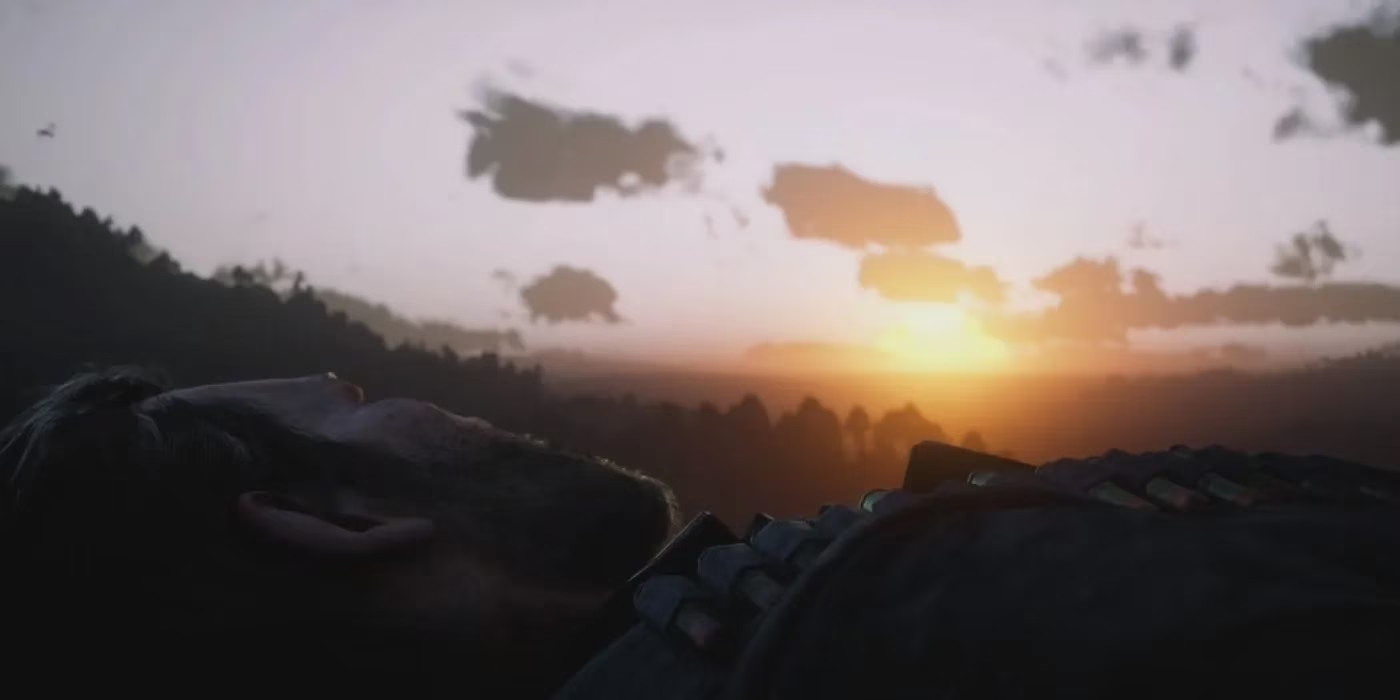
And in the end, on a windswept ridge facing the dawn, a high-honor Arthur Morgan finds his peace. His final breath carries a simple, profound epitaph: "I tried, in the end. I did." These words resonate far beyond the immediate context of saving John. They are an acknowledgment to the player, to the world, and to himself. He tried to be good in a world that demanded ruthlessness. He tried to love in a life built on violence. He tried to leave a legacy that was more than just another ghost story of the West. In that trying—in the conscious choice to perform "a loving act"—Arthur Morgan, the complicated outlaw, the weary ghost, the loyal son, found his redemption. His story remains, nearly a decade after the game's release, a towering testament to video game storytelling, a poignant elegy for the last outlaws of the American frontier.