I remember the moment I paused the world. There I was, Arthur Morgan, a man carved from pixels and code, pulling back the bolt on my trusty rifle. The action was a blur, a split-second flicker in the grand, dusty tapestry of Red Dead Redemption 2. But something made me stop. I slipped into photo mode, a digital sanctuary where time holds its breath, and I saw it. There, nestled in the chamber, was a single, perfect, unspent round. My breath caught. It was a detail so small, so easily lost in the whirlwind of a gunfight, but it was there. Rockstar, in its quiet, obsessive genius, had placed it there. For a game that asks you to live a hundred hours of another man's life, this tiny brass-and-lead truth was a whispered promise: we see the world as you do, in all its intricate, fleeting glory. It’s the kind of thing that makes you go, 'Wow, they really didn't have to go there, but they did.'
That moment, shared by a fellow traveler on the digital plains of Reddit, isn't just a neat trick. It's the soul of modern gaming laid bare. We've journeyed far from blocky sprites and simple loops. Now, our playgrounds are built on engines of immense power, forged by studios like Rockstar who pour lifetimes into every blade of prairie grass, every glint of sunset on a river. Red Dead Redemption 2 wasn't just a game; it was a testament to this pursuit. Its world didn't just exist; it breathed. You could lose yourself for hours, not in quests, but in the simple act of being—tracking a legendary animal, sharing a quiet campfire story, or yes, noticing the meticulous choreography of reloading a weapon. The hardware caught up with the dream, and the dream became a living, breathing America.
And the fights? Oh, they were visceral poems. From the crude, honest symphony of knuckles on jaw to the precise, echoing punctuation of a revolver shot, every conflict felt weighty, consequential. The arsenal was an extension of your will:
-
The Knife: A whisper in the dark, intimate and final.
-
The Revolver: The voice of authority, classic and reliable.
-
The Rifle: The long arm of justice (or injustice), for when distance was your ally.
-
Your Fists: The primal argument, messy, personal, and strangely honorable.
Most skirmishes were over in a heartbeat, a chaotic flurry. But that’s the magic trick, isn’t it? The game respected the reality of violence enough to hide its most painstaking details within that chaos, trusting that someone, someday, would slow down and appreciate the craft. It’s like they’re winking at us from behind the screen.
This obsession with detail is no accident. It’s been fueled, in part, by us—the players with cameras in our pockets. Photo modes have turned us all into digital anthropologists, freezing frames to scrutinize the texture of a coat, the reflection in a puddle, the round in a chamber. When the world is in motion, so much beauty blurs past. But pause it, zoom in… that’s when a game truly reveals its heart. Any shortcut, any missing stitch in the fabric, would scream its absence. Rockstar, knowing our gaze has sharpened, has only doubled down.
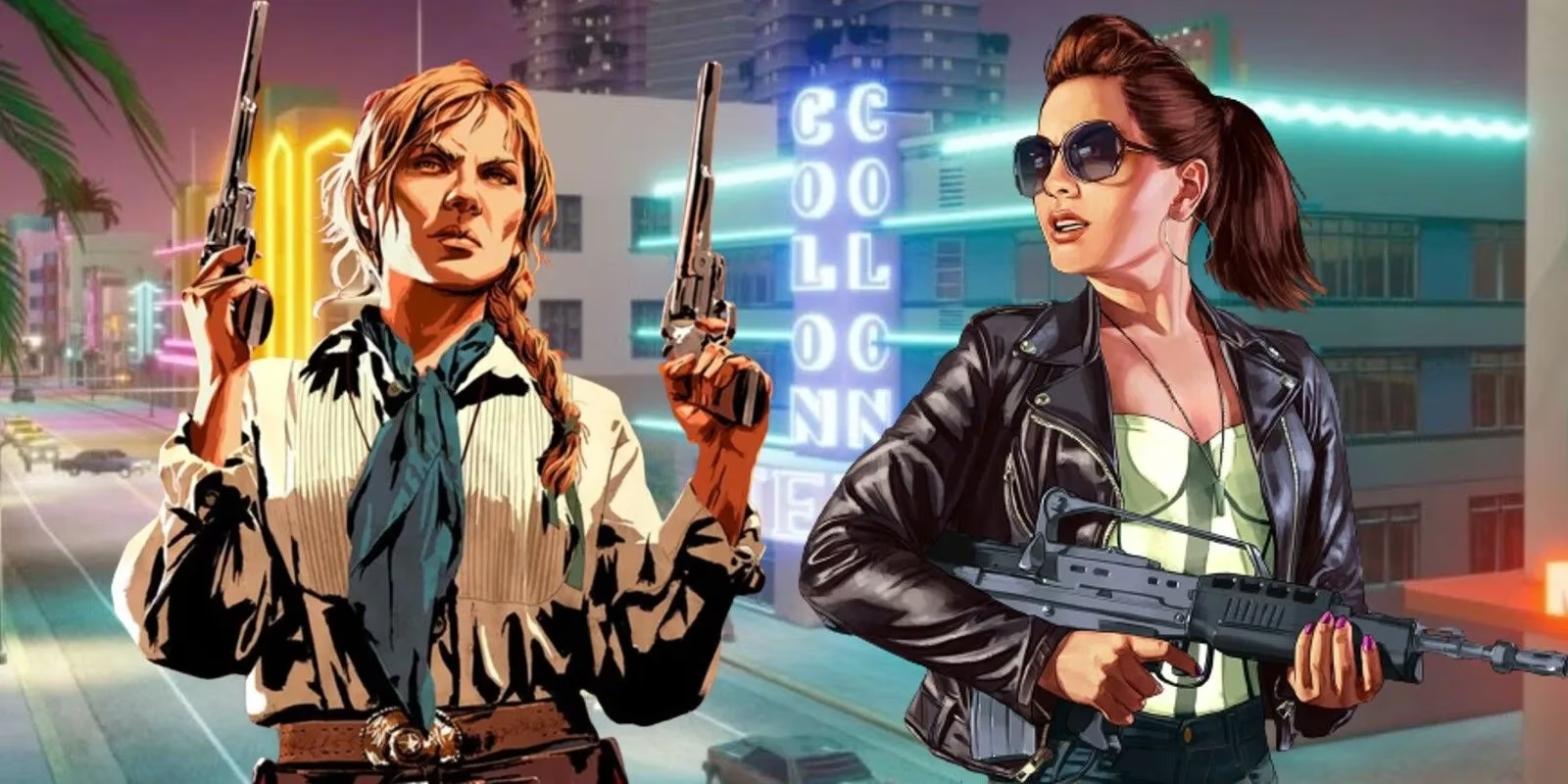
Which brings us to the horizon, glowing with the neon promise of Grand Theft Auto 6. If Red Dead 2 was a love letter to a vanishing past, painted in oils and dust, GTA 6 feels like it’s being sculpted from the living, breathing energy of a future just out of reach. Its reveal trailer didn’t just show a city; it showed an ecosystem. The streets of Vice City and the shores of Leonida teemed with a life so dense it felt contagious. The promise is clear: this will be a world where every detail of Red Dead 2 is not just matched, but multiplied, woven into a tapestry of modern chaos.
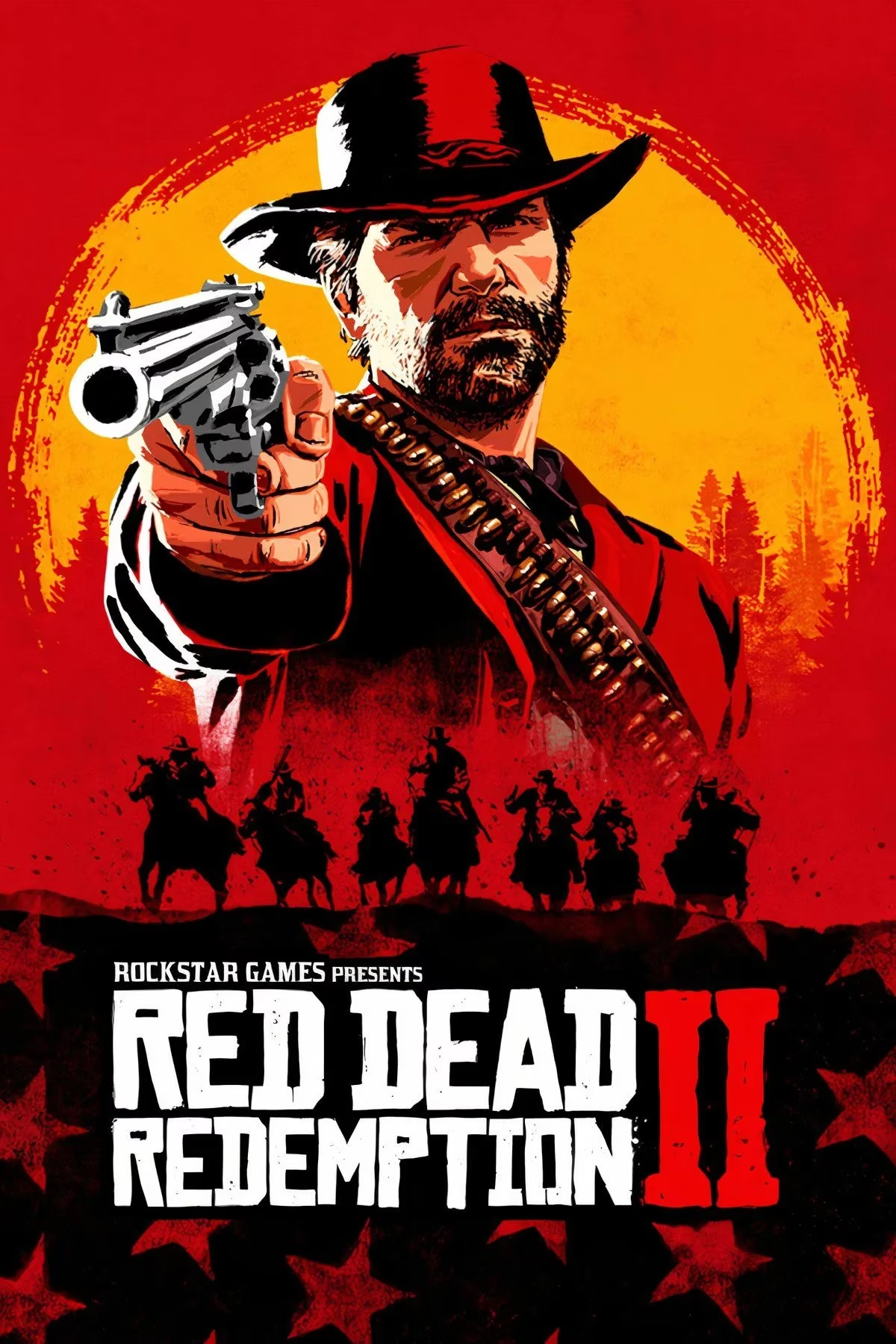
The engine is the key. Rockstar is building this new frontier on a new iteration of its RAGE engine, a tool reported to be leagues beyond what powered the last decade of its classics. Think about that. Red Dead Redemption 2, in 2018, pushed the PlayStation 4 and Xbox One to their absolute limits, creating a visual and systemic masterpiece that still leaves me awestruck. It was demanding, it was lavish, it was… almost too much for the machines of its time. Now, with the raw power of current-generation consoles as its exclusive canvas (for now, at least), the question isn't if Rockstar will cram in more detail, but how. How deep will the simulation run? How many stories will whisper from the crowded sidewalks? How many tiny, perfect, easily missed truths will be waiting for me to pause and discover?
This relentless pursuit is the secret to the longevity of these worlds. It’s why, even now in 2026, players still return to the sun-bleached hills of New Austin or the glittering, cynical sprawl of Los Santos. We don't just play these games; we inhabit them. They offer a freedom that’s as much about introspection as it is about action. You can follow the dotted line of a mission, or you can simply sit by a lake and watch the world turn. Red Dead Redemption 2 was a monumental achievement, a quiet, epic poem written in gun smoke and honor. But its greatest legacy might be the standard it set—a benchmark of intimate realism that now serves as the foundation for something even wilder, even more alive.
So, I wait. I remember the cool weight of that virtual round in the chamber, a small secret shared between me and the makers. And I dream of the secrets waiting in the humid air of Vice City. Rockstar taught me to look closer, to pause, to appreciate the spaces between the bullets. With GTA 6, I have a feeling those spaces are going to be absolutely… well, you know. Packed. The detail is the destination, and the journey there is everything.